Tuesday, March 23, 2010

Blog Post #10 - Jews on the Silk Road

Jewish participation in trade on the Silk Road seems to be all but guaranteed Lena Cansdale's article, "Jews on the Silk Road." I found particularly interesting the mention of their status as "dhimmis" in Persia, as it would have very easily have facilitated their ability to trade with wide-ranging groups of people. Not only would they have friendly relations with the Christians in the West, but they could also travel unharmed (ignoring the harsh weather conditions) through Islam-dominated regions, often establishing communities along the way.


http://www.iajgs.org/cemetery/afghanistan/ghur.html


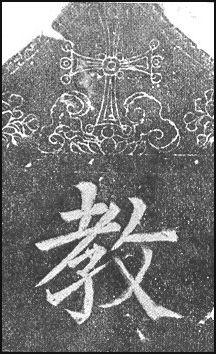
The discovery of a Jewish cemetery in Afghanistan reminded me a lot of the presence of Nestorian Christianity in China. The presence of Christian symbols alongside Chinese script seems just as mismatched as the "Judeo-Persian" inscriptions on tombstones found in Afghanistan. The Christians' and the Jews' statuses as second-class (but also protected) citizens likely allowed for their mostly unobstructed journeys to the Far East, which left behind these religious and cultural oddities.

Tuesday, February 23, 2010

Blog Post #9 - The Great Game

In this week's readings (Ch. 10-14 from the Frances Wood book), one of my favourite aspects was the intense curiosity which the Silk Road inspired in its explorers. Mostly described as "anti-social," people like Stein, Przhevalsky, and Elias became famous by traveling as far away from Western society as was possible. Elias was said to have wanted to avoided a business career in favour of less social endeavours, thereby leading him to cross Mongolia and explore Karakorum. That this was a logical alternative is fascinating to me, as some of the tasks required of them were quite unusual and grotesque. Sven Hedin's account of climbing into the Tower of Silence in order to obtain three human skulls (whose rotting flesh was still somewhat intact) is only one of many assignments given to these explorers, who likely would have preferred instead to avoid contact with such rotting corpses. The pull of the Silk Road seems to have been so powerful as to have made any required actions tolerable -- especially considering that Hedin returned to Kashgar in June 1895 yet left in order to embark on another exploration in December! The dedication to the exploration and collection of "Buddha images" and "Christian relics" in Khotan and Yarkand is just one of many which illustrate the intense attraction these men had to their expeditions.

Tuesday, February 9, 2010

Blog Post #8 - Views of Islam for the last 40 years

This week's readings provided excellent background information regarding popular opinions about "fundamentalist" Muslims, as well as whether or not historical factors were taken into account during their formation. As such a hot button issue, arguments about women's rights in Muslim regions of the world are never going to be settled nor fully understood simply by examining the history of such "fundamentalist" groups.

What this exploration does do, though, is shed some light on just how multi-faceted their history is, allowing for a deeper and less partial understanding of who supports these practices and how how they became so widespread.

Hirschkind and Mahmood ("Feminism, the Taliban, and Politics of Counter-Insurgency") use Salman Rushdie's beliefs as a perfect example of such a partial, one-sided view of Islam from the West's persepective: Islam itself is wholly incompatible with Western ideals of modernization and freedom. This, in addition to his other controversial remarks, only heightened the tension between the West and the Muslim world. As Said insists ("The Clash of Ignorance"), pitting the West against Islam is a "gimmick" which serves more as a tool to bolster the idea of our "superiority," rather than creating a working model of how the world works, paying great attention to the effects of each civilization or culture upon the other.

Tuesday, February 2, 2010

Blog Post #7 - Islam in China

This week's readings were particularly interesting to me, as I have taken a few courses on Islam at UofT. The readings somewhat address the role of trade in facilitating the spread of Islam into China, as well as the modern status of Muslims in China. I look forward to the class discussion about this phenomenon, as other religious such as Buddhism seem to have integrated so seamlessly into Chinese culture. Despite Islam's intention to be universally accepted, it has never fully merged with the more "Chinese" or "East Asian" traditions, such as Confucianism and Daoism. Whether it's the monotheistic aspect, or the extremely strong linguistic attachment to Arabic, Islam's acceptance in China doesn't seem to go past individual Muslims' immersion in Chinese culture. Again, the class discussion about Islam's arrival and battle to stay in China is something which I will find extremely intriguing!

Monday, January 11, 2010

Group Topic #3 - Manichaeism as a Syncretic Tradition

This week's readings on Manichaeism raise some interesting questions about the idea of syncretism and whether or not what Mani started could be considered a syncretic tradition or not.

On one hand, the term "syncretic" makes me think of an organic process in which two traditions merge out of either mutual (or similar) beliefs... or when two distinct cultures live harmoniously for a long period of time and eventually use some of the same terminology, whether or not they hold the same meaning for both groups.

Manichaeism, for me, doesn't completely fit into either of those categories, as Mani seems to have hand-crafted his religion in order to seem cohesive with the major religious traditions in his part of the world. By redefining terms such as "Buddha" and "Bodhisattva," as well as using his own concepts of Light and Dark to explain the origins of mankind ["Eve, whose body contained less Light than his, allowed herself to be seduced by a demon, whereupon she gave birth to Cain and Abel." (Klimkeit article)], he in a sense was able to provide a tradition which all people could instantly relate to, whether or not he was using their religious terminology "correctly." I have difficulty calling Manichaeism a "syncretic" tradition with the knowledge of its goal-oriented formulation; it seems to have been too calculated, focusing solely on targeting specific religious traditions and leadings their followers toward his religion instead.

But maybe I'm being naive in my idea of what a truly "syncretic" tradition should be!

Friday, January 8, 2010

Blog Post #6 - Nestorian Christianity in Tang China

[Bundy, David D., "Missiological Reflections on Nestorian Christianity in China during the Tang Dyanasty."]

Before doing the readings this week, I began to wonder why the Nestorian church ultimately faced a decline in Tang China. Its ability to adapt to the Chinese culture and the Chinese people's willingness to accept it as a foreign tradition seemed to create quite a bit of stability. In the Bundy reading, though, I was reminded of something we talked about in class this past Tuesday: the selling of ordinances. With the need for governmental income becoming desperate, the Chinese government's policy of eliminating all ordinances seems to have applied to all religious institutions at the time, especially monasteries:

"A decree dated September 12, 845 C.E. recounts the ordered dissolution of monasteries throughout the empire (not just the Christian ones) and the repatriation of foreign monks... The monks were required to return to lay life, resume their original occupations and pay taxes" (19).

This setback, along with "the competition of a vigorous Buddhism and its distance from the ecclesiastical centers in Mesopotamia" all seem to have played large roles in the disruption of the growth of the Nestorian church in Tang China (24).

I found especially interesting the openness of the Chinese people during the Tang dynasty (at least in the two capital cities) to foreign cultures. Capital cities tend to be the epicenters of multiculturalism, and Ch'ang-an and Lo-yang seem to have been no different. With the acceptance of Western music, food, clothes, and makeup, it's no surprise that the Nestorian Christians were relatively welcomed there, as opposed to more rural parts of China and the rest of Asia. These cities were likely the only places Nestorian Christian could have possibly taken hold so far east!


No wonder people's minds were blown when they saw the Chinese writing inscribed next to a cross -- it was so localized, it was virtually nonexistent in rural China.