[Bundy, David D., "Missiological Reflections on Nestorian Christianity in China during the Tang Dyanasty."]
"A decree dated September 12, 845 C.E. recounts the ordered dissolution of monasteries throughout the empire (not just the Christian ones) and the repatriation of foreign monks... The monks were required to return to lay life, resume their original occupations and pay taxes" (19).
This setback, along with "the competition of a vigorous Buddhism and its distance from the ecclesiastical centers in Mesopotamia" all seem to have played large roles in the disruption of the growth of the Nestorian church in Tang China (24).
I found especially interesting the openness of the Chinese people during the Tang dynasty (at least in the two capital cities) to foreign cultures. Capital cities tend to be the epicenters of multiculturalism, and Ch'ang-an and Lo-yang seem to have been no different. With the acceptance of Western music, food, clothes, and makeup, it's no surprise that the Nestorian Christians were relatively welcomed there, as opposed to more rural parts of China and the rest of Asia. These cities were likely the only places Nestorian Christian could have possibly taken hold so far east!
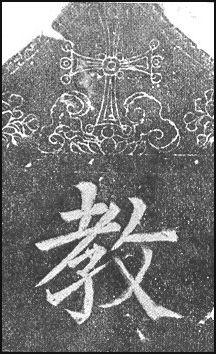
No wonder people's minds were blown when they saw the Chinese writing inscribed next to a cross -- it was so localized, it was virtually nonexistent in rural China.